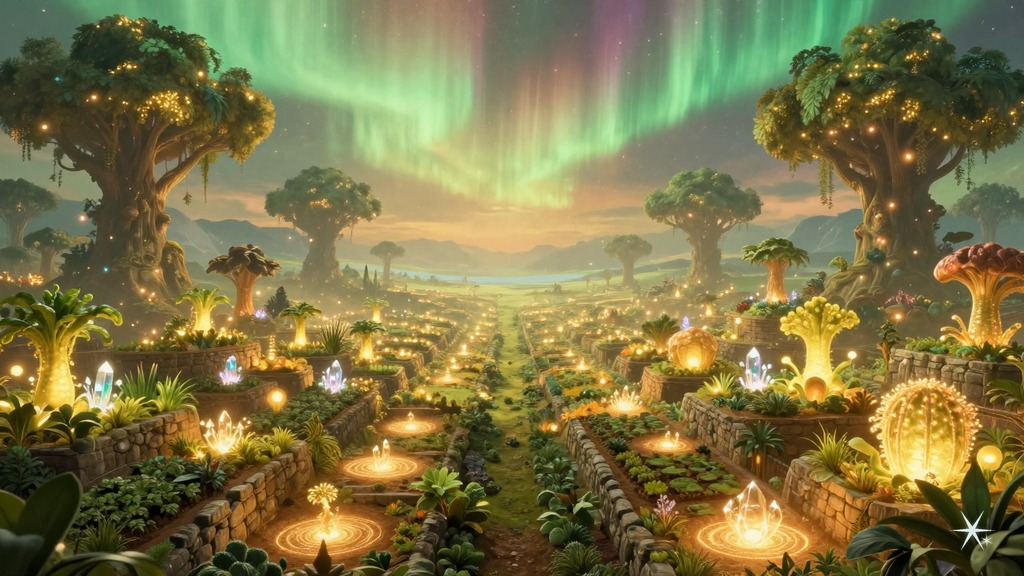
How many Farming Life in Another World manga volumes are out right now? The short answer: 16 in Japanese, 12 in English, and the series is still ongoing. Whether you caught the anime, had the series recommended to you, or just stumbled across it while searching for something relaxing to read, this guide covers every volume, the story progression, and how to start buying.
Let’s get into it.
How Many Farming Life in Another World Manga Volumes Are There?
To put a finer point on it: 16 volumes in Japanese, 12 in English, and the series is still running with no end announced.
The manga adaptation of Isekai Nonbiri Nouka (異世界のんびり農家, roughly “Easygoing Farmer in Another World”) is drawn by 剣康之 (Yasuyuki Tsurugi) and based on the light novel by 内藤騎之介 (Kinosuke Naito), with character designs by やすも (Yasumo). “Isekai” is a Japanese word meaning “another world” — it refers to a hugely popular genre of manga and anime where a character is transported or reborn into a fantasy world. The manga has been serialized in Fujimi Shobo’s Monthly Dragon Age magazine since 2017 — meaning new chapters appear in the magazine first, then get collected into the paperback volumes you buy off shelves. The first collected volume hit shelves in Japan in March 2018.
The English edition has been steadily catching up, with Volume 12 — the most recent English release — arriving on June 23, 2026.
If you’re just getting started, twelve volumes is a solid amount of reading. Each volume runs roughly 160–180 pages and reads quickly — the art is clean and the pacing is breezy, so most readers can finish a volume in under an hour. And if you’re impatient for more, those four Japanese-only volumes are out there waiting.
But what’s the series actually about? The premise is deceptively simple and endlessly charming: an overworked Japanese office worker who lived a rough life dies and is reincarnated in another world. God grants him one gift — an All-Purpose Farming Tool that can transform into any agricultural implement he needs. Armed with this divine farming tool, he sets out to build a peaceful life from scratch. What starts as a one-man homestead gradually becomes Tall Tree Village, a thriving community filled with vampires, elves, demons, wolves, and all manner of fantasy creatures.
It’s an “another world” story, but instead of dungeon crawling or demon lord battles, you get crop rotations, village festivals, and a protagonist who genuinely just wants to farm in peace. The comedy comes from the enormous gap between Hiraku’s humble self-image and the absurd powerhouse he actually is — and the overpowered settlement he’s accidentally building.
Story Arcs by Volume
One of the nice things about this series is that it doesn’t have the kind of intense cliffhangers that make you miserable between volumes. It’s structured more like a slow, satisfying build — each group of volumes focuses on a phase of the village’s growth. Here’s how it breaks down.
Volumes 1–3 — Starting the Farm from Scratch
This is where everything begins. Machio Hiraku arrives in a dense, dangerous forest with nothing but the All-Purpose Farming Tool granted to him by God. These opening volumes are all about survival and discovery — clearing land, planting crops, building shelter, and figuring out how this new world works.
It doesn’t stay solo for long, though. Hiraku’s first companions are inferno wolves — massive, fire-breathing wolves that decide he’s worth following. Then come the vampires, who arrive as refugees and become some of the village’s earliest and most important residents.
The tone is established right away: this is a series about building something from nothing. There’s genuine warmth in watching Hiraku’s little clearing in the forest slowly become a functioning homestead. The farming details are satisfying, the crafting is fun to follow, and the humor kicks in early as Hiraku remains completely unaware of how overpowered his tool (and he himself) really is.
If you enjoy the “starting from zero” phase of settlement-building stories, these three volumes are a treat.
Volumes 4–6 — A Village Takes Shape
By this point, Tall Tree Village is no longer just Hiraku and a handful of companions. The population explodes as new species arrive: elves, lizardmen, demons, and various other fantasy races all find their way to the village and decide to stay.
These volumes shift the focus from pure survival to community management. Hiraku starts dealing with the logistics of feeding and housing a growing population, establishing rules and roles, and navigating the very different cultures and personalities now living under one roof.
Diplomatic relationships with neighboring communities start forming here too. The outside world begins to take notice of this strange, prosperous settlement in the middle of nowhere. What makes these volumes funny is that Hiraku approaches everything with the mindset of a modest farmer, while everyone around him recognizes that Tall Tree Village is quietly becoming one of the most powerful places in the world.
The village takes on a real identity in these volumes. You start to feel invested in the community as a whole, not just Hiraku’s personal journey.
Volumes 7–9 — Community, Festivals, and Growing Pains
This is where the series leans into its relaxed, everyday-life strengths. Tall Tree Village now has enough residents and infrastructure to support annual events, competitions, and festivals — and these become some of the most entertaining chapters in the series. (“Slice-of-life” is the genre term for stories that focus on daily routines and small moments rather than epic battles — and this series is one of the best examples.)
At the same time, the wider world’s politics and power dynamics start pulling at the village. Other nations and powerful figures become aware of Big Tree Village, and Hiraku has to navigate situations that are way above the pay grade of a simple farmer (not that he sees it that way).
Hiraku’s family grows during this stretch too, adding new layers to the story. And the comedy continues to mine the gap between Hiraku’s self-perception — “I’m just a guy who likes farming” — and the reality that he could casually overpower most of the world’s strongest beings. The people around him walk on eggshells, terrified of his strength, while he worries about whether his tomatoes are getting enough sunlight.
These volumes reward readers who’ve been following the gradual build. The payoff of seeing all these characters and relationships develop is genuinely satisfying.
Volumes 10–12 — The Village’s Influence Spreads
The stakes expand significantly in this stretch. Tall Tree Village’s reputation has spread far beyond its borders, and the village is increasingly recognized as a hidden superpower — by everyone except Hiraku, naturally.
The next generation begins appearing in the storylines, which adds a fun new dynamic. You start seeing the children of established characters, and the village’s future comes into focus.
Trade networks and alliances become more prominent. The village isn’t just self-sufficient anymore — it’s a hub that other communities depend on. The political maneuvering around Big Tree Village gets more complex, though the series never loses its cozy core. Even when the stakes are nominally high, the tone stays warm and lighthearted.
Volume 12 is the most recent English release, so this is where English-only readers are currently caught up.
Farming Life in Another World, Vol. 12
Volumes 13–16 — Japanese-Only Releases
Four additional volumes are currently available only in Japanese, with Volume 16 being the latest (released in Japan on March 13, 2026). The series remains ongoing, and these volumes continue to expand on Tall Tree Village’s growing influence in the wider world — new alliances, escalating political entanglements, and the ongoing comedy of Hiraku being the last person to realize how powerful his community has become.
English translations are progressing at a steady pace, and the gap between the Japanese and English releases has been narrowing. If you’re reading in English, you can expect these volumes to arrive over the coming months.
For collectors and readers who can’t wait (and can read Japanese or just want the physical books), these volumes are available through Japanese retailers and import shops.
Where the Light Novel and Anime Stand
Farming Life in Another World started as a web novel — a story published chapter-by-chapter for free on an online platform (similar to how some authors publish serially on sites like Wattpad or Royal Road). It was later picked up and published as a light novel series by Enterbrain (a KADOKAWA imprint). Light novels are a Japanese publishing format — they’re short novels (usually 200–300 pages) with occasional illustrations, aimed at a similar audience as manga. The manga is an adaptation of that light novel source material.
The light novel is significantly further ahead than the manga in terms of story coverage. Both are ongoing, so the light novel continues to be the “lead” version of the story. If you ever finish the manga and want more, the light novels are there — though English availability is limited as of 2026, with only a handful of volumes translated.
On the anime side, Season 1 aired in 2023 and was produced by Zero-G. It covers roughly the early manga volumes — the establishment of Tall Tree Village, the arrival of the first companions, and the initial community-building phase. Season 2 aired from April to June 2026.
If you watched the anime and want to continue the story in manga form, you have a couple of options:
- Start from Volume 1 anyway. The manga includes details and scenes that the anime skips or condenses. It’s a relaxing series, so re-covering familiar ground doesn’t feel like a chore — it feels like revisiting a place you like.
- Pick up around Volume 4 or 5 if you want to get to new content faster. The anime’s first season roughly corresponds to the first few volumes, so jumping in around this point will get you past most of what you’ve already seen. You might miss some manga-only details, but you won’t be lost.
Either approach works. This isn’t a plot-heavy thriller where missing one chapter ruins everything — it’s a cozy community story, and you’ll settle into it quickly regardless of where you start.
Which Edition Should You Buy?
For English-language readers, the manga is available in both print and digital formats. The digital editions are typically available through major ebook platforms, while print copies can be found at bookstores and online retailers.
A note on format: manga volumes — including the English editions — are read right-to-left, meaning you start at what a Western reader would consider the “back” of the book and read panels from right to left across each page. If you’ve never read manga before, it takes about two pages to get used to, and most volumes include a quick guide on the first page.
Here are some things to consider when deciding how to buy:
- Print is great if you like having physical volumes on a shelf. The covers are charming, and it’s the kind of relaxing series you might want to physically pick up and flip through. Earlier volumes occasionally go through brief periods of being out of stock, but they tend to come back — this is a popular series with consistent demand.
- Digital is the most convenient option, especially if you want to start reading immediately. No stock concerns, no shipping wait. Digital editions are also nice for a series this long — twelve volumes (and counting) takes up real shelf space.
- Japanese imports (Volumes 13–16) are an option if you read Japanese or just want the physical books for your collection. Import pricing varies, but these are standard KADOKAWA collected volumes and are easy to find through Japanese booksellers that ship internationally. Note that Japanese editions are slightly smaller in physical size than typical English manga volumes.
The English release schedule has been consistent, which is encouraging. The four-volume gap between the Japanese and English editions is fairly typical for ongoing manga translations, and there’s no sign of the English release slowing down.
Frequently Asked Questions
How many volumes of Farming Life in Another World are there?
As of 2026, there are 16 volumes in Japanese and 12 volumes in English. The series is ongoing, so more volumes will continue to be released in both languages.
Is the manga finished?
No. Farming Life in Another World is an ongoing series — it’s still being serialized in Monthly Dragon Age magazine in Japan, and new collected volumes continue to be published.
How is the manga different from the light novel?
They tell the same core story, but the manga condenses and visualizes what the light novel describes in text. The manga naturally moves faster — it can show a farming scene in a few panels that the light novel might spend pages describing. Some subplot details are trimmed in the manga adaptation, which is normal for adaptations between formats. If you love the world and want more depth, the light novel is a great companion. If you prefer a visual, faster-paced experience, the manga is the way to go.
Should I read the manga or watch the anime?
Either works as an entry point. The anime is a fun introduction to the world and characters, especially if you want to hear the voices and see the farming scenes animated. But the manga covers significantly more story than the anime has adapted so far. If you want the fullest experience currently available in a single medium, the manga is your best bet. Many fans watch the anime first and then switch to the manga to continue the story.
Who publishes the English edition?
The English manga is published by One Peace Books and is widely available through major bookstores and online retailers in North America.
When does the next English volume come out?
Volume 12 released on June 23, 2026. The series has maintained a steady English release schedule, so you can expect Volume 13 to follow within a few months. Keep an eye on retailer listings for exact dates as they’re announced.
Can I read this series if I don’t usually read manga set in fantasy worlds?
Yes — this is one of the most approachable series in the genre. There are no drawn-out battles over who’s the strongest, no love-triangle drama, no world-ending threats. It’s fundamentally a community-building and farming story that happens to be set in a fantasy world. If you like relaxing, feel-good reads, you’ll feel right at home here.